
For over a century, cinema thrived under a simple logic: scarcity. Scarcity of access, of channels, of films. A few titles per year, often selected by faceless executives that decided what was “worthy” of being released in theaters or on broadcast television.
Scarcity of space: movie theaters had a limited number of screens, television imposed rigid schedules, and every hour of programming represented a compromise, a choice, a renunciation.
Under this system, every film that passed the selection committees had enormous cultural and financial weight. In effect, the selection created scarcity, and this scarcity, while excluding many, guaranteed visibility to a few. Each title had its own space, its own guaranteed audience.
Today, that world has all but disappeared following the digital revolution. Now, we live in an era of absolute abundance, which knows no filters. Every day, over 30,000 hours of content are uploaded to YouTube every hour. Each week, hundreds of independent films find an outlet online without going through any selector or buyer. Everyone can distribute — and they can do so at costs close to zero. Space is no longer limited. Access is no longer a privilege. But it is precisely for this reason that attention — which has remained scarce — has become the most precious and difficult commodity to acquire.
In the world of abundance, it is the public — or rather, the algorithm that interprets the public — that decides what survives and what disappears in the sea of content. Authority has passed from the hands of industry professionals to the invisible hands of recommendation systems and engagement logics. For too long, we have considered the film industry as a vertical structure. The flow was top-down — from the studios to the festivals, from sales companies to broadcasters, from local distributors to the final viewers. Every step was filtered, every piece of content was mediated, every right was segmented by territories and time windows.
That model was built on the historical premise that resources were limited. And therefore, it was worthwhile to concentrate, sell, resell, license, and segment. Today, that is no longer the case.
In the last five years, cinema has undergone one of the most profound systemic shocks in its history. On the one hand, the pandemic accelerated the decline of the movie theater as the center of gravity of the industry. On the other hand, the uncontrolled rise of streaming has destroyed entry barriers, but also economic certainties. The average value of licenses has dwindled, while traditional production costs — especially in Europe — have remained high.
Meanwhile, a paradox has occurred: everyone can produce, but few manage to be seen. The democratization of tools has generated unprecedented overproduction.
Today, often those who evaluate a film don’t even watch it. They process it: with budget grids, metadata, and performance predictors. This doesn’t mean that the curator no longer has a role.
The mediation of the future will not be vertical, but horizontal. More like an editorial algorithm than a gatekeeper. And above all, it will have to be fast. Because in the time it takes the traditional system to organize a territorial sale, the audience has already chosen something else. And when the audience chooses, the system can only play catch-up.
What we now call “new models” have actually existed for over a decade. YouTube was born in 2005. The first forms of AVoD date back more than 15 years. FAST channels exploded during the pandemic, but their mechanisms had already been in place for some time. We are not facing something new. We are facing a consolidated reality, still largely ignored — or worse, snubbed — by a significant part of the film industry.
Many producers, especially those who grew up between festivals, public funding, and European co-productions, look at these platforms with suspicion. Yet, for years, the numbers have been telling a different story.
On Tubi, a free AVoD platform active in the U.S., more than a billion hours of content are consumed every month. On YouTube, long-form content (over 40 minutes) is growing exponentially, with consumption that in many cases exceeds that of paid platforms. Even TikTok now has a rapidly expanding long-form section.
The industry professionals need to relearn how to interpret what is happening. For a long time, the festival was the place of legitimization. Festivals were instruments of symbolic and commercial certification. A film that premiered in Berlin, Venice, or Cannes — or even just within a well-established circuit — immediately acquired a reputation and a negotiable value in the market.
That system played a fundamental role in the development of auteur cinema, and in part continues to do so. But today it is no longer enough. In a context where over 10,000 independent films are produced annually in North America alone, it is unthinkable that festivals can still be the main channel of validation. Yet, part of the production system continues to build its entire distribution strategy around festival selection.
This approach, in addition to being risky, is profoundly anachronistic. The festivals shouldn’t disappear. They just need to be decentralized. An emblematic example: in the last two years, films completely ignored by official circuits have built a niche audience through word-of-mouth on Reddit, Discord, or TikTok. Some were then “rediscovered” by the festivals themselves.
We have entered a post-festival era. Not because festivals are useless, but because they are not enough. If distribution changes, production must change as well. But the production system continues to operate as if nothing has changed: budgets are written “the old-fashioned way,” public funding is sought, and partners are sought who often guarantee structure but not audience.
One cannot continue to produce films without asking the most basic and most neglected question of all: “Who will see this film?”
But there is another, more structural aspect that deserves to be discussed openly: the distorted role of tax credits.
Tax credits were created with the idea of revitalizing the industry, attracting investment, and promoting local production. In theory, they are virtuous tools: They stimulate employment, increase competitiveness, and support the creative sector. In practice, they have become the only real tool that allows many producers to continue making films without any real interest in the audience, distribution, or the final result. In some cases, the tax credit has become more important than the film itself. Films can be made, production fees collected, and yet never reach an audience.
This is not about demonizing the instrument. But about restoring it to its original function: supporting what has value. The production system must start again from adherence to the market.
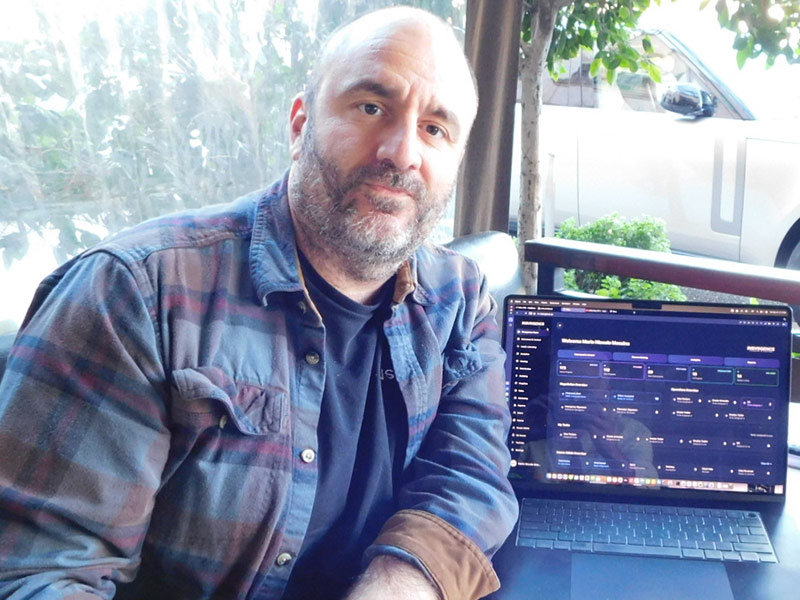
(By Mario Niccoló Messina, founder and CEO of the Los Angeles-based Insurgence.)
Audio Version (a DV Works service)


Leave A Comment