
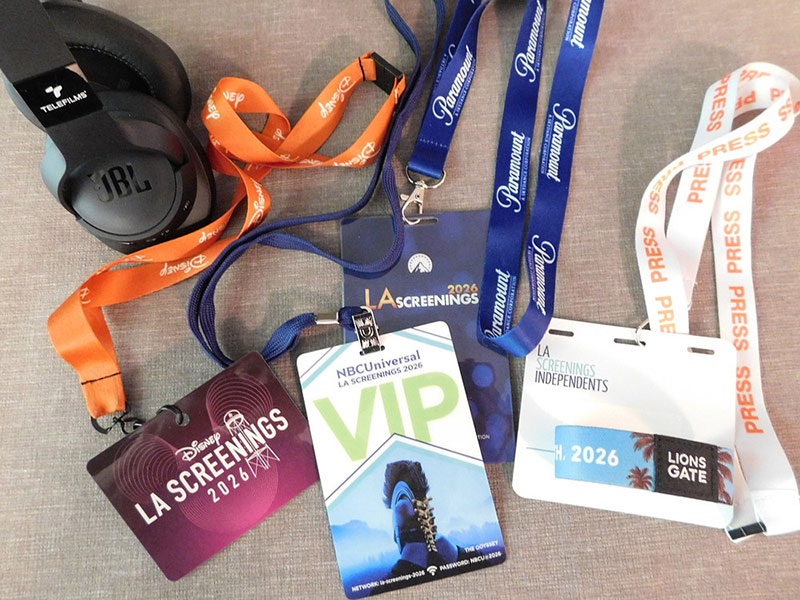
For the past 63 years, the L.A. Screenings — originally called the “May Screenings” — followed a predictable pattern. First the American TV networks presented their new seasons’ series to advertising agencies and brands in New York City. Then, the U.S. studios that produced or distributed the new programs would show the content to international buyers in Los Angeles.
If, at first, the Screenings were somewhat informal gatherings, with the passing of time, they became very important to both the U.S. studios and international TV buyers, to the point that most TV outlets around the world began sending some 14 or more executives to Hollywood in May. Nowadays, the number has been reduced to a maximum of four per TV outlet, making the current Screenings an event with some 700 total buyers at most, down from its peak of 1,700.
However, what has not changed over the years is the elaborate new content presentations, as reported to VideoAge by one former top-level U.S. studio executive who asked to remain anonymous.
“The arrival of clients and the L.A. Screenings themselves are very carefully orchestrated,” he said. He further explained that “the various studio organizations behind the L.A. Screenings function like a script that is constantly being revised, with the speakers on stage memorizing every single word of their presentations and rehearsing for hours on end, as if they were about to make their theatrical debuts. There is a specific script that everyone has, and it must be adhered to scene by scene. It is, quite literally, like a screenplay.”
He then continued: “When, in the view of studios’ sales executives, the new series being presented fall short of expectations, hours would be spent figuring out how to ‘package’ the product — making it appear better than it actually is. In addition, marketing experts would brief the sales teams on the specific phrasing to use for their pitches.
“At times, clients who might have left the screening room disliking a series would often change their minds after spending some time during the lunch break with a member of the cast — especially if the talents are famous. In America, celebrities are very willing to participate at the L.A. Screenings because they understand that the sale of the series they star in is at stake — and, by extension, their own longevity within the industry,” he concluded.
This year, for the 100th anniversary of Universal studios, NBCUniversal showered buyers with posters of the studio’s greatest TV talents. At the Paramount theater, the studios put up a display of costumes from their top shows. Before the Disney party on its lot, the studio screened The Mandalorian and Grogu, the big screen version of the fourth season of the Star Wars TV saga. Inside a packed Aero Theatre in Santa Monica, Lionsgate screened new content before bussing buyers to a party at the Santa Monica pier (as Santa Monica is also Lionsgate’s home base).
Michael Bonner, president, NBCUniversal Global TV Distribution, said that 500 clients were expected over the course of his studio’s three screening days. Don McGregor, president, Paramount Global Content Licensing, said that he welcomed 700 international clients across his studio’s two days. The difference in the number of buyers was attributed by some international acquisition executives to the fact that, this year, there was a poor coordination among the studios, with some screenings conflicting with others.
But according to Jennifer Ebell, EVP, Television Distribution, for Fifth Season, “buyer attendance remained strong, with the right decision-makers from across the globe in [the] room. While conversations happen year-round, L.A. Screenings offers a valuable opportunity to meet face to face. Even in a cost-conscious market, it continues to draw the people who matter,” she said.
How different these L.A. Screenings were from the 2025 edition could be easily ascertained by looking at the list of pilots in the May 2025 and 2026 issues of VideoAge. There are 19 for the 2026- 2027 broadcast TV season and just five in last year’s guide.
The number and days of screenings for this year also increased, while the number of indies exhibiting at the hotel (this year, the SLS Hotel in Beverly Hills, yet another new venue) remained stable at 55.
Going back to the Upfronts, Monday, May 11, the start of the networks’ presentations, was a busy day in New York City, with NBC and FOX. ABC followed on May 12 at the Javits Center, while CBS held smaller Upfronts earlier, in April, in Los Angeles.
Canela’s Upfront presentation for its Hispanic advertisers was also held on Monday at the Avra Restaurant in Rockefeller Center, which was across the street from NBC’s Upfront presentation at Radio City Music Hall. FOX’s Upfronts were staged at the New York City Center.
Moving over to the indies, the big news circulating inside the SLS Hotel, which this year housed the L.A. Screenings Independents, was the sudden departure of Darío Turovelzky as CEO of Telefe, which he helped make into Argentina’s most popular broadcast TV network. Telefe was acquired in October by the local media holding company Grupo TV Litoral from Paramount Skydance.
When VideoAge asked both buyers and sellers about the new venue, the SLS Hotel (a favorite of Portugal football/soccer ace Cristiano Ronaldo), which replaced last year’s Roosevelt Hotel (which, in turn, superseded the Century Plaza Hotel), the general opinion was favorable. However, before committing to another year, L.A. Screenings organizers sent out a survey among participants to solicit their opinions.
In terms of exhibitors — split between hotel suites and meeting tables — the number listed on the board by the elevators remained the same as last year at 55. However, according to official figures, the total number of companies was 107, including those firms that replaced other companies that canceled at the last minute (such as Ledafilms), and those who attended without registering or exhibiting. The exhibitors listed on the board came from 12 countries, in addition to the U.S. Also significant was a large contingent of members of the Latin trade media, who were in L.A. together with a sizable group of U.S. public relations agents.
As for the number of TV content buyers, it has been reported that this year’s L.A. Screenings event attracted over 700 of them to the studios. Many — an estimated 180 (mostly from LatAm, with a few from Hispanic Canada and the U.S.) — were at the SLS Hotel for the indie portion, which started briskly on Thursday, May 14, but slowed down on the second and final day, Friday, May 15.
Even though the L.A. Screenings Independents market ended on May 15, Argentina’s Telefilms held down the fort with its own screening and party on the following day at the SLS Hotel. The Telefilms’ gathering was held at the same time that the major U.S. studios started their own screenings and parties on Saturday, May 16, 2026. The studios’ events ended on Wednesday, May 20, with Disney’s LatAm screenings, which were held on its studio’s lot.
Finally, returning to ex-Telefe bigwig Turovelzky, the unconfirmed rumor circulating at the L.A. Screenings Independents was that his days at Telefe were numbered after he aligned himself with his old boss Gustavo Yankelevich, who also bid to buy Telefe from Paramount, but lost to the current owners.
Audio Version (a DV Works service)


Leave A Comment