
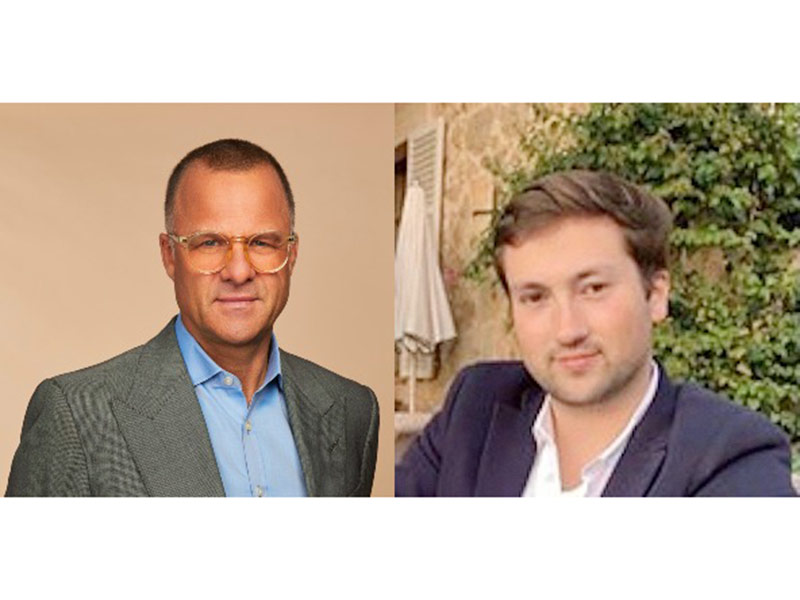
Below, find a Q&A with some of the world’s major players in the factual TV arena: Patrick Vien, group managing director, International A+E Global Media (pictured above l.); David Buoymaster, CIO, Radial Entertainment (pictured above r.); Nick Tanner, Passion Distribution’s director of Sales and Co-productions; Tim Mutimer, CEO of Cineflix Rights; and Amanda Groom, CEO, The Bridge.
VideoAge: Do you see growth in both the factual genre and in terms of buyers’ demand?
Patrick Vien: We are seeing strong growth in demand for factual programming. A+E Factual Studios currently has more than 250 hours in production and more than 100 projects in development, giving us the scale to produce across factual genres for our own brands and third-party channels.
David Buoymaster: Radial continues to see material growth across factual verticals, despite an overall slowdown in streamer/network commissions in the space. We continue to accelerate our investments in the space, while many others are becoming increasingly cautious.
Nick Tanner: Demand remains strong across the factual spectrum, from specialist factual and observational series to premium documentary events and more entertainment-led formats. In a risk-averse commissioning environment, buyers are looking for content that can deliver reliably.
Tim Mutimer: We continue to see soft demand from our traditional buyers. With acquisitions budgets challenged, the focus of our buyers is to secure the biggest performing brands. However, as exclusivity is less of an issue than previously for many buyers, this is allowing us to grow our own digital business.
Amanda Groom: Factual demand remains substantial, but buyers are increasingly selective. Distributors are moving upstream into development; AVoD/SVoD is opening new factual opportunities; and premium factual is still thriving across broadcasters and streamers. Factual remains one of the most resilient areas of international television.
VideoAge: Are streamers commissioning more factual content, or are traditional broadcasters still the strongest buyers?
Patrick Vien: At A+E we operate across every platform and medium from traditional linear to streamers, FAST services, and other digital platforms, as we expand our ecosystem and work closely with our partners. Our content reaches more than 200 territories in 40 languages, and our international FAST presence includes more than 70 channels on leading platforms worldwide. And while A+E’s linear portfolio continues to outperform the broader cable entertainment market, more than half of our reach and consumption during the past year occurred outside of our linear platforms.
David Buoymaster: Our Originals model is not predicated on commissions from any pay-TV buyers, as both streamers and broadcasters have become increasingly cautious to commission projects that would have been unquestionably greenlit a few years ago.
Nick Tanner: Traditional broadcasters still commission and acquire the greatest volume of factual content. The most intense competition remains around premium documentaries featuring exclusive celebrity access or major cultural phenomena. In recent years, this area has largely been dominated by SVoDs and integrated platforms such as Comcast, which have the resources to develop a slate of large-scale projects over longer periods. And when necessary, they can outbid traditional broadcasters for high-profile opportunities. At the same time, YouTube has become an increasingly important destination for factual content.
Amanda Groom: The streamers changed the factual market enormously, but traditional broadcasters have not gone away. What’s changed is the business logic behind the commission. Streamers are particularly interested in factual that can generate global conversation. Traditional broadcasters, meanwhile, still have enormous strengths in specialist factual, current affairs, science, history, natural history, and journalism.
VideoAge: What is the biggest challenge facing factual distributors?
Patrick Vien: The greatest challenge is navigating an increasingly fragmented market while ensuring that every title reaches the platform and audience where it can deliver the greatest value.
David Buoymaster: The biggest challenges facing factual distributors today are how to make the model work in a world where first-window sales and/or outright commissions are down materially. Radial has worked to refine our model to fit the modern distribution landscape and future-proof our production greenlight, partnership development, and overall distribution model.
Nick Tanner: Maintaining a strong pipeline of high-quality factual content remains an ongoing challenge. At the same time, many buyers are operating under both financial and strategic pressures, leading to fewer acquisitions and reduced volume commitments.
Tim Mutimer: The pipeline supply for new content is an issue for many distributors. M&A activity at the studios has led to an increasing number of producers being tied to their parent company’s distribution arm. Broadcasters are commissioning fewer programs overall, and lower budgets are hampering production companies’ ability to get their shows into production, compounding the supply issue pipeline that way.
Amanda Groom: Budgets are tight. Buyers want something distinctive, but are increasingly reluctant to take creative risks. Distributors are having to work much harder to demonstrate why a title will sell. The distributor, producer, and international adviser need to be thinking about the international market before the program is made.
VideoAge: Which territories are currently the strongest buyers of factual programming?
David Buoymaster: We continue to see strong demand for factual programming across North America and are increasingly seeing demand for high-quality, factual programming in Germany, Switzerland, and Austria. Other English-language markets remain reliable sources of both supply and demand for us, including many great co-production partnerships with U.K. and Australia-based production companies.
Nick Tanner: Our core client base remains consistent across markets including Australia and New Zealand, and Northern Europe including the U.K. and Central and Eastern Europe. There is space for factual and international unscripted in the U.S., though this is increasingly on digital channels rather than linear networks. We are also seeing some thematic pay-TV channels broaden their commissioning and acquisition strategies. Channels traditionally associated with a single genre, such as reality programming, are becoming more open to a wider range of factual series.
Tim Mutimer: North America remains a key market for us, particularly as we grow our digital business significantly across FAST, YouTube, and VoD, with the launch of FAST channels and YouTube channels, including some of our biggest brands.
Amanda Groom: The U.S. remains hugely important and although the traditional U.S. TV environment is challenging, factual is finding new life through SVoD and AVoD. The U.K. remains one of the world’s great factual production countries. Then you have the European markets, including France, Germany, the Nordics, the Netherlands, and Spain, which remain important buyers and co-production partners for factual programming, with France and Germany particularly being factual production powerhouses.
VideoAge: What makes a factual program travel internationally in today’s market?
Patrick Vien: An original and accessible premise, a subject that resonates across cultures, distinctive storytelling, and talent with an authentic connection to the material. Recognizable figures such as Kevin Bacon, Ted Danson, Tom Hanks, Dolph Lundgren, and many others provide immediate familiarity, but their curiosity, intelligence, and individual perspectives are what draw audiences more deeply into the stories.
Combining universal ideas with distinctive voices and a clear understanding of local audiences gives factual programming its greatest opportunity to travel.
David Buoymaster: Authenticity, high-quality and substantive interviews, subject matter (i.e. criminal cases, etc.) selection, and production value all matter more today than ever before.
Nick Tanner: Successful international factual content usually offers either an extraordinary story, revelatory new evidence, or a fresh perspective on a little-known or underrepresented person, community, idea, or event. Style and tone also play an important role.
Tim Mutimer: Long-running lifestyle shows with talent attached or which expand a franchise are always in demand. We have a strong slate of aspirational food and travel shows. History series are perennial best sellers. Returning documentary series resonate with the current global geopolitical situation, but enable us to update those stories through the lens of programs that audiences are already familiar with and trust.
VideoAge: What are buyers asking for today that they were not asking for two or three years ago?
Patrick Vien: Buyers are asking for greater flexibility, more precise performance insights, and programming tailored to the needs of their audiences. They want to know not only whether a title is compelling, but also how it complements their existing offerings, which viewers it can attract or retain, and how its value can extend across platforms and windows.
Nick Tanner: The fundamental factual TV requirements remain largely unchanged, although buyers place greater emphasis on a program’s prior performance, particularly on its home network.
Amanda Groom: Three or four years ago, a producer could come into a market with a strong program and say: “Here is the TV series.” Today the questions are much more likely to be: Who is the audience? Where else can this work? What is the access? What is the talent? Can it become a series? What is the international hook? Basically, they are asking, “Why should I buy this program rather than the other 200 factual programs in front of me?”
Audio Version (a DV Works service)october


Leave A Comment