
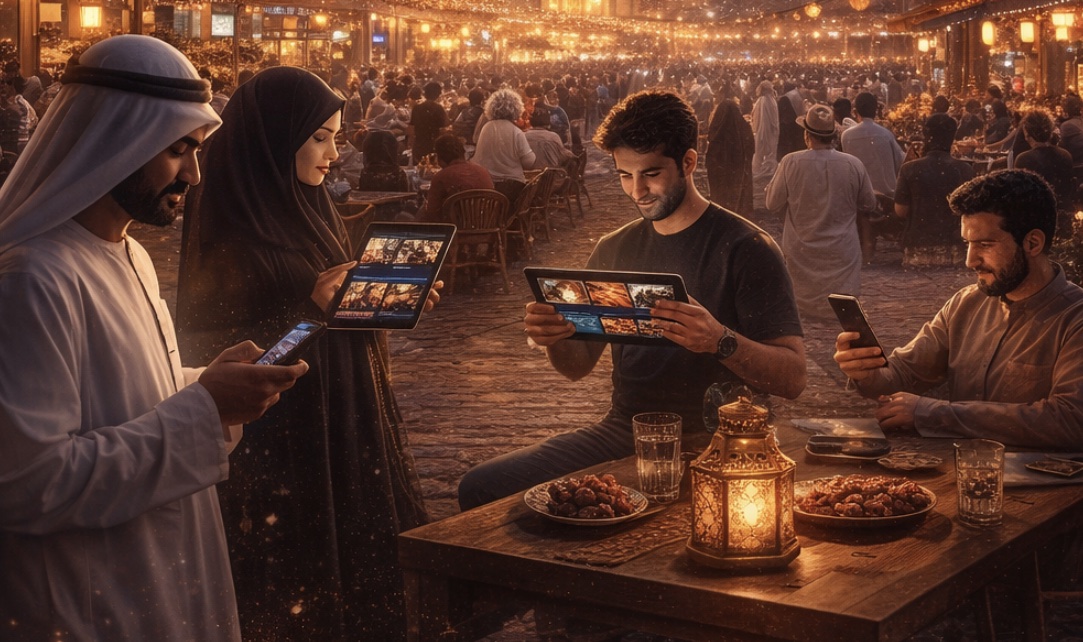
The Dubai International Content Market recently published its 2026 report on Ramadan TV consumption, detailing content trends and audience behavior across the MENA, APAC, and African regions.
For decades, Ramadan has been the cornerstone of television in the Middle East and North Africa. This year saw approximately 244 original series produced across 17 Arab countries, marking a 68 percent year-on-year increase (source: elCinema Report).
Ramadan’s unique lifestyle continues to shape engagement. Peak viewing occurs between 8 p.m. and 2 a.m., reflecting post-Iftar routines and late-night social habits. Average daily viewing surpassed five hours, with a 32 percent spike on the first day of Ramadan compared to the previous week.
Across the region, content preferences remain rooted in cultural relevance: Egypt leans into social dramas and star-led productions; Qatar emphasizes religious and historical narratives; while Morocco blends family series and comedy.
However, the industry is moving away from large-scale historical epics toward family melodramas, psychological thrillers and light comedies with social themes.
Ramadan 2026 data confirms that the genre landscape is becoming more performance-based than volume-based, with action emerging as the standout growth category in engagement while traditional drama, despite its dominance in production, delivers a modest share of audience.
Perhaps the most significant structural change in Ramadan 2026 is the dominance of the 15-episode format, which has now become the industry standard. Platforms such as Shahid and Watch IT have fully embraced this model, often splitting Ramadan into two distinct content waves to sustain engagement.
Another key industry development is the emergence of integrated subscription models combining platforms like Shahid, Disney+, and OSN+. These bundles reduce subscription fatigue while offering a mix of local Arabic originals, Hollywood blockbusters, and international series.


Leave A Comment