
After the ousting of Venezuelan dictator Nicolás Maduro by U.S. armed forces, Venezuela is slowly attempting to return to normal under the guidance of the U.S. government. What follows is a summary of the current situation of television in Venezuela sent to VideoAge‘s Water Cooler by a Caracas resident and media observer:
“The State has strong regulatory control over the media system, and many private companies have either closed or reduced their political programming. In 2007, the government shut down RCTV, and since then, press organizations estimate that more than 400 media outlets have closed in the country, including television stations, radio stations and newspapers.
“However, some TV channels are still broadcasting, and these are controlled by the government: VTV, TVes, Vive TV, ANTV, and Avila TV.
“Meanwhile, the private TV channels still operating are Venevision, Televen, Globovision, Meridiano TV, and La Tele Tuya. Although the private TV channels remain on the air, many have reduced political coverage to avoid sanctions.
“Television in Venezuela is supervised by the National Telecommunications Commission, which controls censorship and media in general with the power to revoke licenses, impose fines, suspend transmissions, and remove channels from cable and satellite.
“Because of censorship and the still ongoing economic crises people get news from the Internet and social media. Cable and streaming services have partially replaced traditional TV.
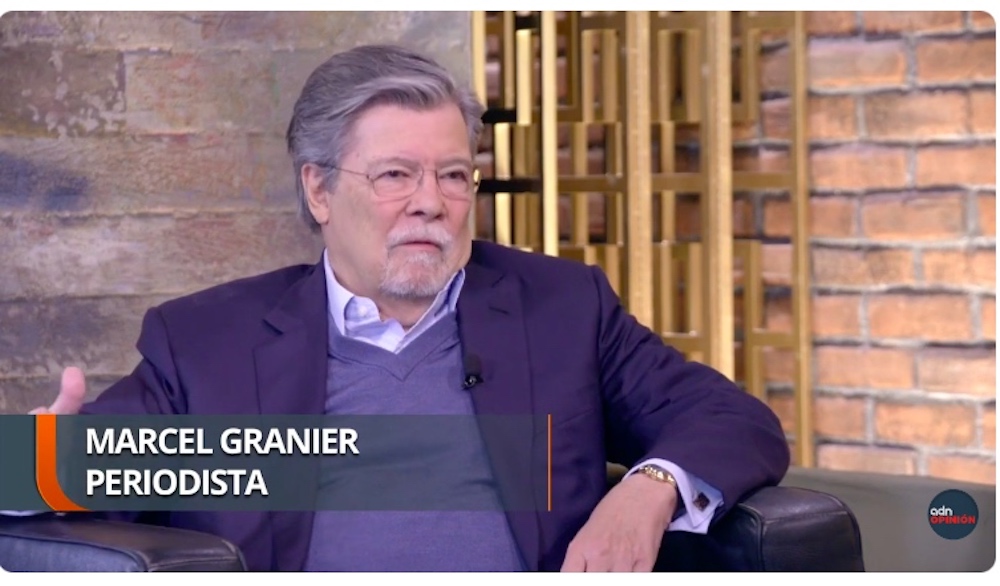
“Marcel Granier (pictured above during a YouTube interview with Ricardo Raphael of Mexico’s ADN Opinion) is still the president of Empresas 1BC, owner of RCTV, and his son Jorge Granier Phelps works between Miami and Los Angeles. He is CEO of a company called Latin Everywhere. He is active on TV at this moment in the U.S., especially for the Latin market. He also worked on Jane the Virgin, the adaptation of an RCTV telenovela from the past. In general, we are supposed to be in a period of transition, but so far nothing has changed.”


Leave A Comment