
By Jacques Barreau*
Held from October 28 to 30 at the Cape Town International Convention Centre of South Africa as part of FAME Week Africa, MIP Africa 2026 once again placed the African audiovisual industry at the center of international attention. More than just a content market, the event reflected a growing ambition to position Africa not simply as a destination for international content, but as a creative force capable of developing, producing and exporting stories to the world.
The international dimension was particularly strong, with participants from 47 countries — a 28 percent increase compared to 2025 — and more than 80 buyers representing 18 countries. France, named this year’s Destination of Honor, brought additional momentum to international cooperation, co-production, and business partnerships.
Beyond the market itself, the conference program offered an interesting overview of the challenges and opportunities facing the industry. Discussions covered financing and investment, the evolution of distribution models, intellectual property, international content circulation, animation, new storytelling formats, and the development of local talent. Sessions such as “Beyond Adaptation: How Stories Travel Across Cultures” and “The Netflix Effect: Local Stories, Global Audiences” addressed a fundamental question: how can African stories reach international audiences without losing their cultural identity?
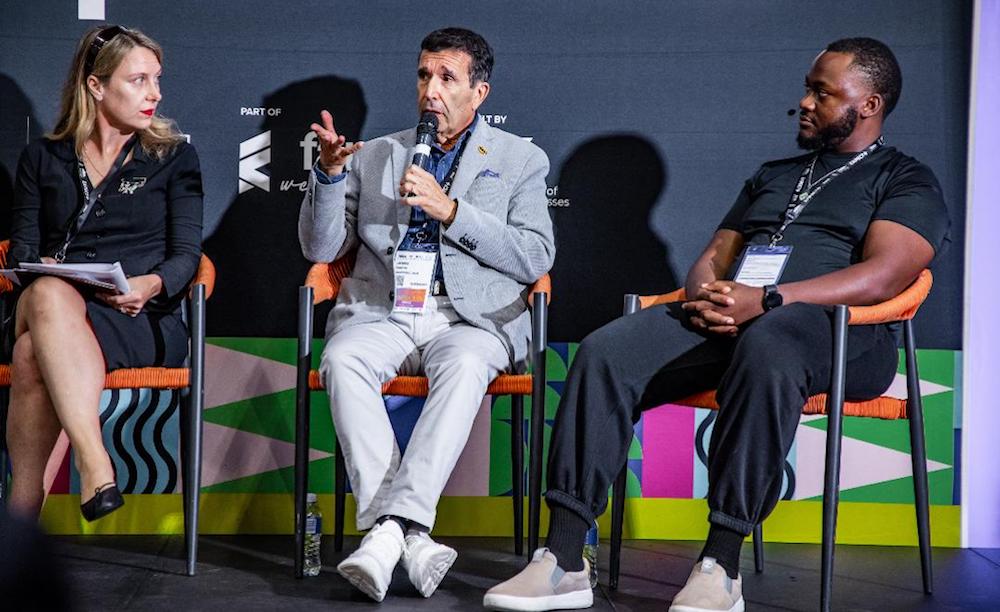
One of the standout discussions was undoubtedly “AI in Film & Content: Tool, Threat, or Competitive Advantage?” The panel brought together perspectives from technology, production, education, intellectual property, and media localization, including this reporter from TransPerfect Media.
The conversation went beyond the usual debate about whether AI will replace creative professionals. Instead, it examined how AI is transforming the entire audiovisual value chain, from development and production to post-production, localization, and distribution.
For African creators and production companies, AI could represent a particularly significant opportunity. By reducing costs, accelerating workflows, and making sophisticated production tools more accessible, it could help overcome some of the financial and infrastructure barriers that have traditionally limited the industry’s international competitiveness.
However, this opportunity comes with important responsibilities. Intellectual property, consent, authorship, fair compensation, and the preservation of human creativity must remain central to the discussion. The real competitive advantage will not come from adopting AI indiscriminately, but from knowing where technology can enhance human creativity rather than replace it.
Ultimately, MIP Africa 2026 confirmed that the continent is no longer waiting for an invitation to the global audiovisual conversation. African creators are increasingly shaping that conversation on their own terms.
*Jacques Barreau, pictured at the center of the above photo, is Vice President of Media & Interactive Entertainment for TransPerfect, a U.S.- and Spain-based media company.


Leave A Comment