
By Noel Alejandro*
When people hear that we work with an intimacy coordinator, they sometimes imagine the sexual activity itself being choreographed movement by movement. That is not how we work.
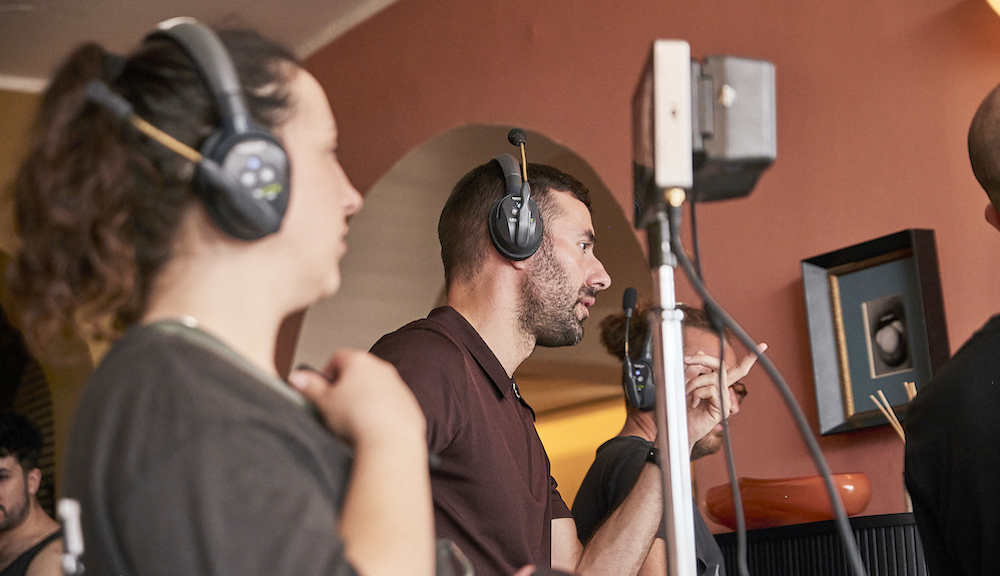
Before shooting, we rehearse the scenes according to the structure established by the script. In cinema, the script is our bible: it gives the film its direction and remains our main point of reference.
This preparation affects the budget, and we deliberately budget for it. Rehearsal means additional performer time, production time, locations, and sometimes additional crew. It costs money, but I see it as an investment in the quality of the narrative, not an optional extra. It is also one of the things that distinguishes our company, Bedtime Stories, from other firms that take a more industrial approach to adult production.
But a script is not necessarily something completely fixed. Rehearsal is also where we discover what needs to evolve. A line may need to sound more natural in a performer’s voice, a transition may not work physically as it did on the page, or we may identify small inconsistencies in the story that can still be refined.
During rehearsals, we work on character, dialogue, emotional intention, relationships, movement through the space, and the overall blocking of each scene. The sexual part is integrated into that process because it belongs to the story rather than existing separately from it.
The intimacy work happens alongside this preparation.
Before filming, performers have clear conversations about boundaries, no-goes, sexual practices, protection, and what they are comfortable doing. But I think it is equally important to talk about desire — what they may actively want to explore or bring into the scene themselves.
For me, consent is not only about restrictions. Performer agency also means having the space to communicate what you want — and what you definitely do not.
When the script requires a sexual scene, we block it. We may establish where it begins, certain positions or transitions, what the camera needs to capture, and where the scene needs to go emotionally. But we do not choreograph every touch or movement.
If every movement is prescribed, you risk removing the genuine interaction between performers. They need enough freedom to listen and respond naturally to each other — and ideally, at some point, to forget that the camera and crew are even there. The structure is there to create clarity, not to eliminate spontaneity.
That kind of narrative complexity demands preparation. The performers need to understand not only what their characters are doing, but why they are doing it and what has happened between them before they enter the scene.
That preparation gives performers more confidence and fluidity once the cameras start rolling. It helps avoid uncertainty, awkward improvisation and performances that do not serve the character or the story.
In addition, whenever a project allows it, we also create a non-explicit or SFW cut. This matters because our films are designed to exist as cinema beyond their explicit content. A non-explicit version allows the performances, narrative, and visual language to reach contexts where explicit imagery cannot be shown. The intimacy remains part of the story even when the explicit images are removed.
*Barcelona- and Berlin-based filmmaker Noel Alejandro creates explicit cinema rooted in narrative, psychological depth, and emotional truth, films that treat intimacy with the same rigor as any other cinematic element.


Leave A Comment