
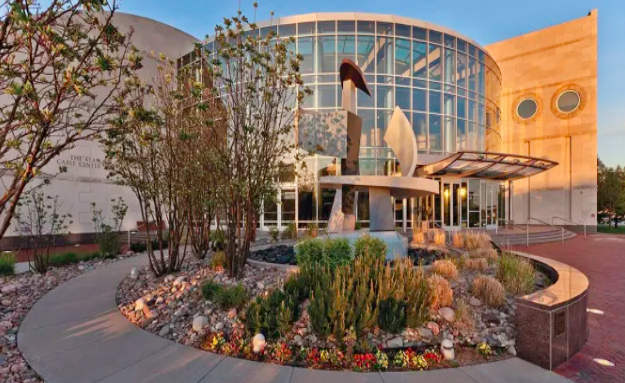
When cable television in the U.S. was at its peak, the industry celebrated itself with a magnificent building in Denver, Colorado.
The Cable Center was conceived during the industry’s boom years, with construction beginning in the late 1990s and the 75,000-square-foot (about 7,000 square-meter) building opening in the early 2000s. John Malone, one of the most influential figures in American cable, summed up the industry’s confidence at the time: “We like to say that radio and TV is the past and cable is the future.”
Today, that building has been sold for $19.5 million to the University of Denver and the Center moved to an 800-square-meter office inside a nearby building, The downsizing reflects the dramatic decline of traditional pay television. At its peak, more than 100 million U.S. households subscribed to pay-TV.
Today, that number has fallen to roughly half its peak level, depending on the definition and measurement period. Cable’s share of television viewing has also declined sharply, with recent estimates putting it at around one-fifth of total U.S. TV viewing.
The Cable Center was a nonprofit organization closely associated with the U.S. cable industry and also associated with the industry’s principal trade gathering, the Cable Show, later known as INTX, which was discontinued after 2016, when the National Cable & Telecommunications Association announced that there would be no 2017 event.
In 2023, the organization launched a new operating identity, the Syndeo Institute at The Cable Center, reflecting a shift away from its traditional role as an industry institution toward leadership development, innovation and workforce development. The Cable Center name remains associated with its historical collections and legacy activities.


Leave A Comment