
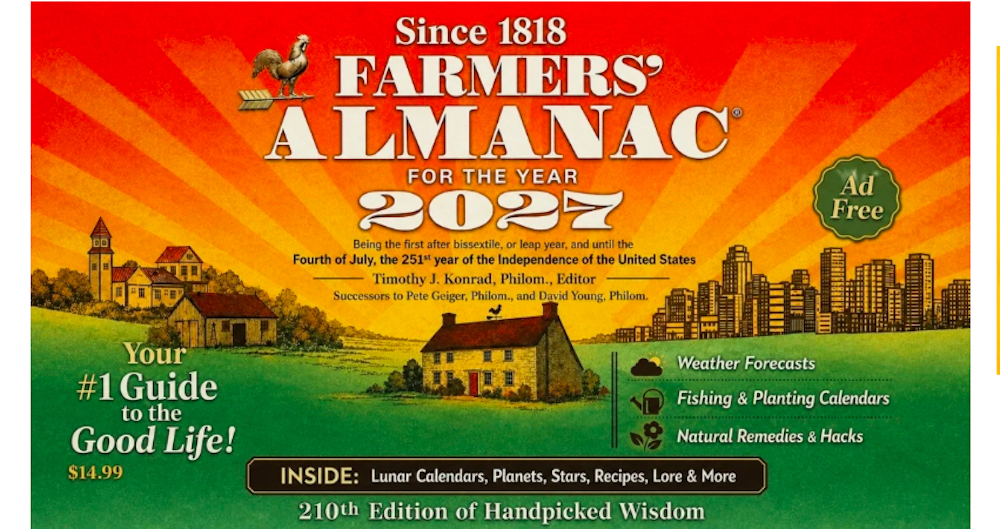
It is often said that predicting the weather is not a science but a crapshoot. Before there were meteorologists, TV weather forecasters, and the U.S. National Weather Service (part of the National Oceanic and Atmospheric Administration), there were useful guides such as the Farmers’ Almanac (published in the U.S. since 1818) and the Calendar of Friar Indovino (published in Italy since 1945). “Indovino” means “fortune-teller,” and the books have long attempted to predict weather patterns years in advance.
On the other hand, a New York Times reporter once wrote, “I get my weather at the nearby dock.” Indeed, people such as fishermen, aviators, and farmers, who are close to nature—and far away from TV meteorologists as well as from both climate-change advocates and deniers—tend to rely on their “sixth sense.” This means looking for signs in nature, including:
- “Red sky at night, sailors’ delight. Red sky at morning, sailors take warning.”
- “Cumulus clouds in a clear blue sky mean it will likely rain.”
- “A wind from the south has rain in its mouth.”
- “Birds flying low, expect rain and a blow.”
- “Clear moon, frost soon.”
The good thing about these weather expressions is that they are not affected by budget cuts to national meteorological services. As for other handy tools, people can use their bones, especially if they suffer from arthritis, or simply buy a barometer. Both can indicate changes in atmospheric pressure and, in their own ways, detect conditions that radar and other sophisticated electronic instruments may not capture, particularly around microclimates.
Nonetheless, weather services are expanding in the free-to-air broadcast TV sector, which tends to rely on increasingly sophisticated electronic devices and a larger pool of meteorologists. These meteorologists tend not to dissect winds, observe birds’ flying patterns, monitor flying insects, or study cloud formations. Instead, they examine radar patterns that shift with the same winds that may already have been anticipated by the flight patterns of birds.


Leave A Comment