
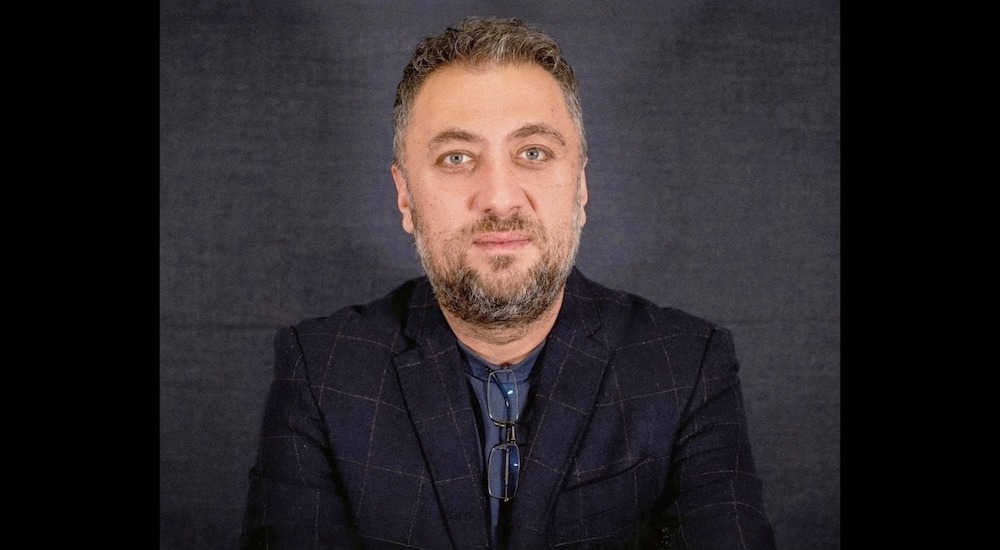
Recently, Romania has been a very active participant at all major international film/TV markets in order to promote the European country’s favorable financial and logistical support to film and TV content producers worldwide. VideoAge asked Valentin Savu (pictured above), general manager of the Office for Film and Investments in Culture (OFIC) at the Ministry of Culture, Romania, a few questions that are often on the minds of producers.
VideoAge: How can producers best navigate the Romanian bureaucracy?
Valentin Savu: Romania’s rebate system is not bureaucratic chaos — it is structured, digital, and timeline-driven. Applications are submitted through our fully digital platform, app.ofic.ro, in English, with real-time tracking and direct communication with OFIC staff.
From submission, the Eligibility Certificate is typically issued in around 30-35 days. After production is completed, producers have a clearly defined window to submit their funding request. Then, following the audit, payment is made within a fixed timeframe — up to 120 days after the approval of the film commission.
In addition, OFIC acts as a governmental bridge. We assist with permits, regulatory compliance, and inter-agency coordination. During production, we provide real-time support and problem-solving. Producers are not left alone to interpret regulations. We guide them through every step — from registration to payment.
VA: How can producers take advantage of the E.U.’s extra subsidies in addition to the 30 percent rebate from Romania?
VS: Because Romania is an E.U. member state, our incentive is fully aligned with European state aid rules. Producers can therefore combine Romanian support with co-production funding, regional schemes, or European mechanisms, provided the structure complies with EU regulations. The 30 percent cash rebate can be cumulated with other E.U. or national state aid schemes. In standard cases, the cumulation can reach up to 60 percent of the total eligible budget. However, for what E.U. regulations classify as “difficult audiovisual works” — such as certain art-house films, first or second features, low-budget productions, or culturally significant projects — the cumulation can go up to 100 percent of the eligible budget.
What this means in practice is that Romania is not just offering a 30 percent rebate — we are offering a financing platform.
VA: What are the basic requirements to get the rebate?
VS: For feature films, TV series, documentaries, and animation, the minimum eligible spend in Romania is 100,000 euro. For short films, the threshold is 50,000 euro. Each production can receive up to 10 million euro in rebate support. That cap makes the program highly relevant even for large studio projects, while still maintaining sustainability at a national level.
Projects must also pass a cultural test, as required under E.U. state aid regulations. In practice, this is not restrictive. It can be fulfilled by filming in Romania, employing Romanian or E.U.-based cast and crew, or meeting certain cultural criteria. Most international productions naturally qualify without having to adjust their creative vision. The rebate applies to a wide range of Romanian production expenses — including crew wages, equipment rental, studio facilities, location fees, accommodation, transport, and post-production services.
VA: In addition to flexible working hours, are there any other major working advantages?
VS: Another key advantage is the strength of our technical crews. Romanian professionals have worked on major international productions and award-winning films. Departments such as art direction, set construction, camera, lighting, and post-production are particularly strong.
Romania also offers full E.U. and Schengen (e.g., E.U. open travel) integration. There are no work permits required for E.U. citizens, travel connections are efficient, and cross-border collaboration is seamless. This simplifies casting, co-production structures, and international crew mobility. Producers are not competing for limited windows — they can plan with confidence.
Ultimately, the advantage is structural: speed, access, cost efficiency, and skilled talent — all within a stable European framework. One of Romania’s strongest advantages is operational efficiency. The production ecosystem is agile and centralized. Permits can often be secured within 24 to 48 hours, and the country’s geographic concentration means that studios, urban environments, mountains, forests, and coastal locations are all within short distances of each other. This significantly reduces logistical complexity and company moves.
VA: Is there a subsidy for exploring Romanian settings?
VS: There is no separate financial subsidy dedicated specifically to scouting trips. However, what Romania offers is structured institutional support that significantly reduces the complexity and cost of exploration. OFIC actively facilitates location visits by connecting producers with studios, experienced location managers, service companies, and local authorities. We help coordinate meetings, provide guidance on logistics, and ensure that visits are efficient and productive.
Romania is also geographically compact. Within a short radius from Bucharest, producers can access medieval towns, mountains, forests, modern urban environments, industrial sites, and coastal landscapes. This concentration of diverse locations minimizes travel time and scouting expenses.
Finally, production costs in Romania — accommodation, transport, services — are substantially lower than in Western Europe. So even without a formal scouting grant, exploratory visits remain highly cost-effective.


Leave A Comment