
There was a time when industrialists, researchers, inventors, and scientists considered the good of humanity a better return than personal financial gain.
Today, though, the biggest tech companies don’t sell standalone products. They build ecosystems, and every piece of that system is protected by IP. However, there are some exceptions. For example, it has been reported that Adobe doesn’t patent its AI technology. Then, there’s the fact that the NTSC U.S. TV color broadcast standard was adopted by the U.S. regulatory agency (the FCC) as an open national standard rather than a single proprietary patented standard.
Over the years, several publications have reported on people and companies that did not patent their creations (like emoticons, karaoke, and matches), and recently, Italian print and TV journalist Milena Gabanelli made an interesting list of such distinguished humanitarians.
In her report, Gabanelli featured a randomly listed selection, but in our account below we list them in chronological order starting in 1895 with the German scientist Wilhelm Conrad Röntgen, who discovered X-rays and refused to patent the discovery in order to better benefit the public at large. Then in 1898, Polish-French chemist Marie Curie isolated radium and never patented her discoveries. Canada’s Frederick Banting and Charles Best in 1921 extracted insulin, but did not file for a patent.
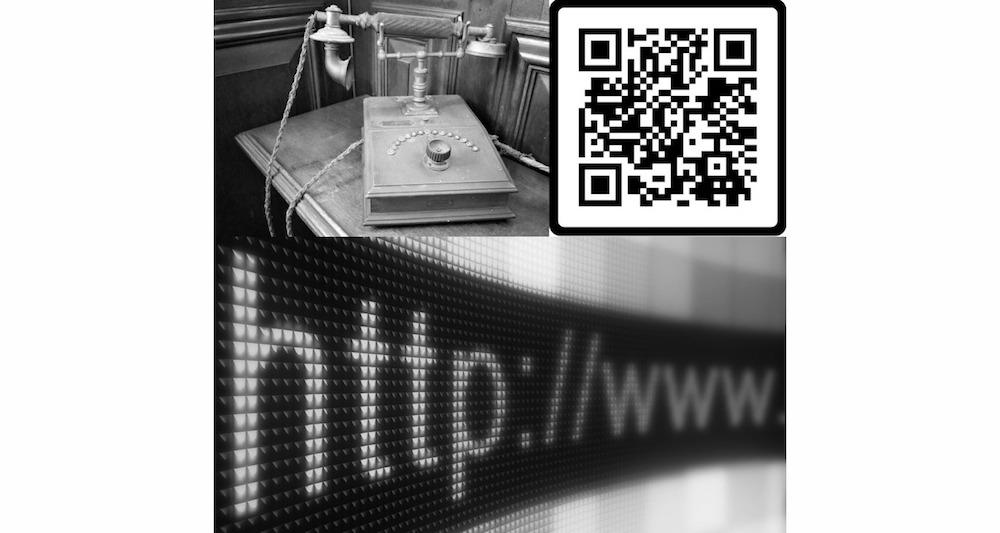
In 1929, Scottish microbiologist Alexander Fleming accidentally discovered penicillin, which he did not patent. Three decades later, in 1955, the American virologist Jonas Salk developed the polio vaccine and didn’t patent it. Three years later, in 1958, Nils Bohlin, a Swedish mechanical engineer, developed the car seat belt for Volvo. Neither the automobile manufacturer nor the inventor wanted to patent the safety feature. In 1973, the U.S. Department of Defense developed the Global Positioning System (GPS), but then-President Ronald Reagan decided to leave it accessible to all. Also in the U.S., a pilot for Northwest Airlines, Robert Plath, in 1987, created the trolley or rolling luggage for traveling. It was not patented. Then, in 1991, the English computer scientist Tim Berners-Lee developed the World Wide Web, a creation that he chose not to patent and that revolutionized commerce and entertainment.
In 1994 in Japan, Masahiro Hara of the Denso Wave company created the QR (quick-response) code, and it was not patented. Closer to our years, in 2023, the Italian high school student Tommaso Caligari developed a detector for early detection of Parkinson’s disease that he did not patent is and therefore available to all.
Then there are those who patented other people’s creations, like Italian-American Antonio Meucci, who, in 1871, couldn’t afford to secure the patent for his telephone invention, which was patented in 1876 by Canada’s Alexander Graham Bell. In 2002, the U.S. Congress recognized Meucci as the inventor of the telephone.
And while Fleming didn’t patent penicillin, American Andrew J. Moyer did, in 1948.


Leave A Comment