
By Dom Serafini
As a million-plus miler, Delta Airlines regularly asks my opinion after each flight.
The idea of improving a service that I frequently use to attend domestic and international TV trade shows and festivals appeals to me, so I oblige and answer the various survey questions.
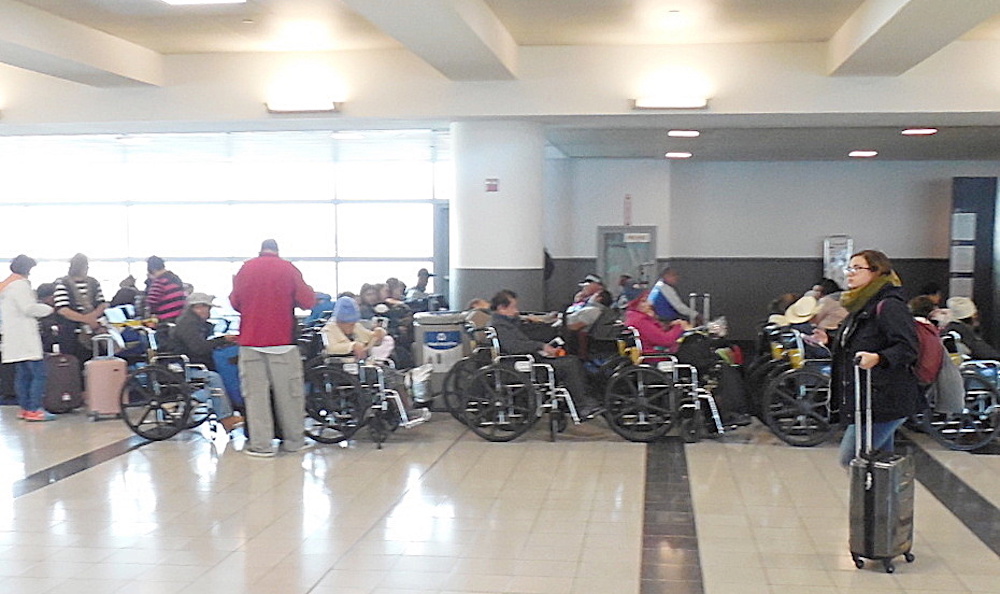
As a frequent flyer, I have a number of opinions, especially on how to improve the boarding process. Opinions that are regularly ignored. But perhaps they won’t be this time around, especially after a front cover story in The Wall Street Journal (and an article in Italy’s Corriere della Sera), detailing the abuse by people who request wheelchairs to board, but zoom out on foot, easily hoisting their suitcases upon landing.
The WSJ calls each of these folks a “Jetway Jesus” since they appear to receive divine intervention while seated on a plane. The problem with these passengers on these “miracle flights” is that they are multiplying exponentially because they’re essentially ignored by airline management and boarding area agents. Some enterprising passengers even ask unrelated elderly travelers that look frail to request a wheelchair so that they can accompany them on the jetway.
But I do not blame people for taking advantage of what is there as it is not illegal. At most it is an abuse. The problem is with the airlines’ gate personnel who allow the abuse, justifying it as something that they cannot contest as it might create problems. But it would not be a problem if these passengers were encouraged to board last, which would benefit them in the end, as explained below.
When surveyed, I have, many times, pointed out that the airlines’ goals should be to expedite the boarding process and to help those who need extra time to enter the plane comfortably, which would be achieved by having them board last.
The way boarding is now handled does a disservice to passengers with small children and those with real disabilities or injuries because by going first they slow down the boarding process with the consequence being that other passengers will tailgate (in order not to delay departure).
Some European airlines are indeed already reducing the number of wheelchairs by having passengers who need extra time board last.
In a recent survey I recounted the story of a domestic flight from the Nice, France airport, which I took after the MIPCOM market in Cannes. A middle-aged couple in wheelchairs wearing oxygen masks arrived at the boarding area. Upon being told that they would be more at ease boarding last, they quickly removed their devices and proceeded to walk onto the plane when their zone was called.


Leave A Comment