
TV talk shows are back on the backburner thanks to U.S. President Donald Trump, who has declared war on late-night TV hosts, and by the TV networks who decry the shows’ reduced advertising revenues.
However, there was a time when talk shows were both very popular and very profitable on U.S. television — both on networks and in syndication (i.e., outside of TV networks’ feeds).
In the U.S., TV talk shows started to emerge in the 1960s, but became popular in the 1980s and 1990s, especially after the FCC regulatory imposition of the Prime Time Access Rule (1971 to 1996), when all networks’ stations and their affiliates had to broadcast non-network programming between 7:30 p.m. and 8:00 p.m.
Early evening shows, such as The Merv Griffin Show (which started in 1962), The Mike Douglas Show (1963-1980), and The Dick Cavett Show (which premiered in 1968), and late-night shows like The Tonight Show (hosted by Johnny Carson from 1962 to 1992) and The Late Show (fronted by David Letterman from 1993 to 2015), were all the rage when they aired.
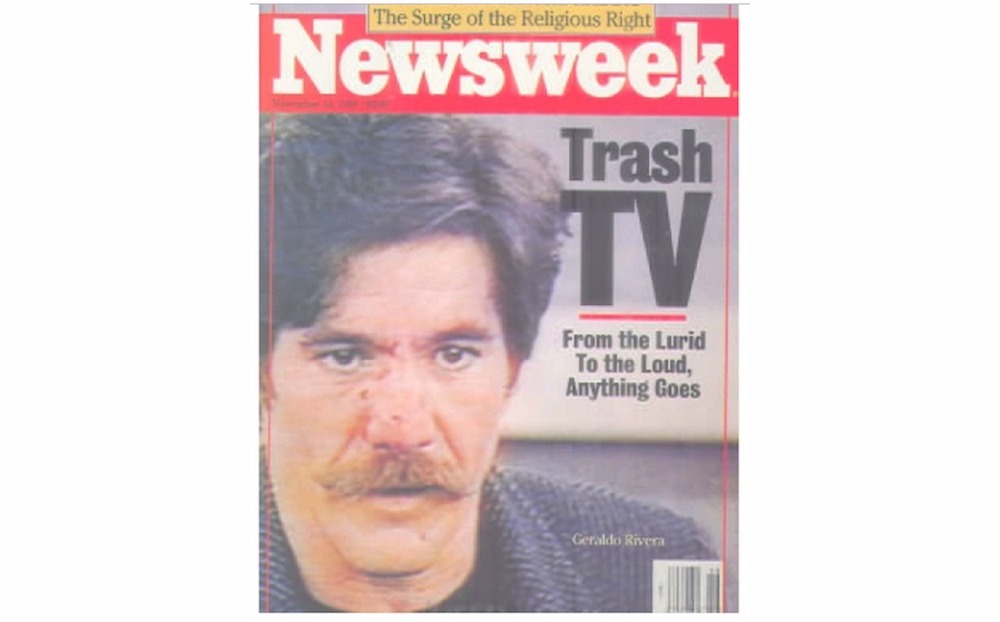
Talk shows were so cheap and profitable that they spilled over from access time and late night into daytime and afternoon slots, and that was when their problems started, basically replicating the rise and fall of TV’s previous big fad — game shows. The only difference was that the downfall for game shows came with a 1959 congressional investigation into quiz show corruption (when seven game shows were canceled due to various shenanigans). Talk shows eventually fell from grace due to their rudeness and crudeness, epitomized in a November 14, 1988 front cover Newsweek story titled “Trash TV,” which popularized the term for afternoon talk shows.
Years later, on Monday, May 25, 2026, Disney’s ABC TV network ran a three-part series from 8 p.m. until 11 p.m. about the popularity of talk shows in the 1990s. The title of the series was revealing: Dirty Talk: When Daytime Talk Shows Ruled TV. It exposed the ugly side of a genre that was so popular with U.S. TV audiences that new syndicated shows kept developing on top of the established 20 weekly ones.
By 1995, the daytime talk show format was pushing the envelope — and its guests — to jaw-dropping public revelations and shocking acts of violence. But the darkest of dark sides was exposed when an ambushed guest murdered another after appearing on The Jenny Jones Show.
After 1996, advertisers began pulling out of the genre due to the fact that the shows became more outlandish, more extravagant, more outrageous, and more confrontational. Many episodes devolved into shouting matches, and in one memorable case, the host, Geraldo Rivera, got his nose punched.
But the talk TV show did not die. It just moved to social media and podcasts. However, the genre got drastically curtailed on daytime and afternoon television, replaced with court shows (e.g., Judge Judy, People’s Court, and Divorce Court), self-help shows (like The Doctors and Dr. Oz), lifestyle, cooking, game, and news shows, and many many reality shows.


Leave A Comment